AEO: Answer Engine Optimization is the Biggest Shift in Search Since Google
Most businesses are completely invisible to AI search engines. Not partially visible. Not underperforming. Invisible.
ChatGPT has 800 million weekly active users. It's on pace to match Google search volume within 36 months. And when someone asks an AI for a recommendation in your category, your company either shows up or it doesn't.
There's no page two. There's no “ranking 11th.” You're either in the answer, or you don't exist.
This is AEO, answer engine optimization, and it's the single biggest change in how people find businesses since Google launched in 1998.
I sat down recently with Kip Bodner, CMO of HubSpot, on the Human in the Loop podcast to break down exactly what's happening with AI search and what businesses need to do about it. The data he shared was staggering. And it confirmed something I've been seeing firsthand in my own business.
Quick Answer
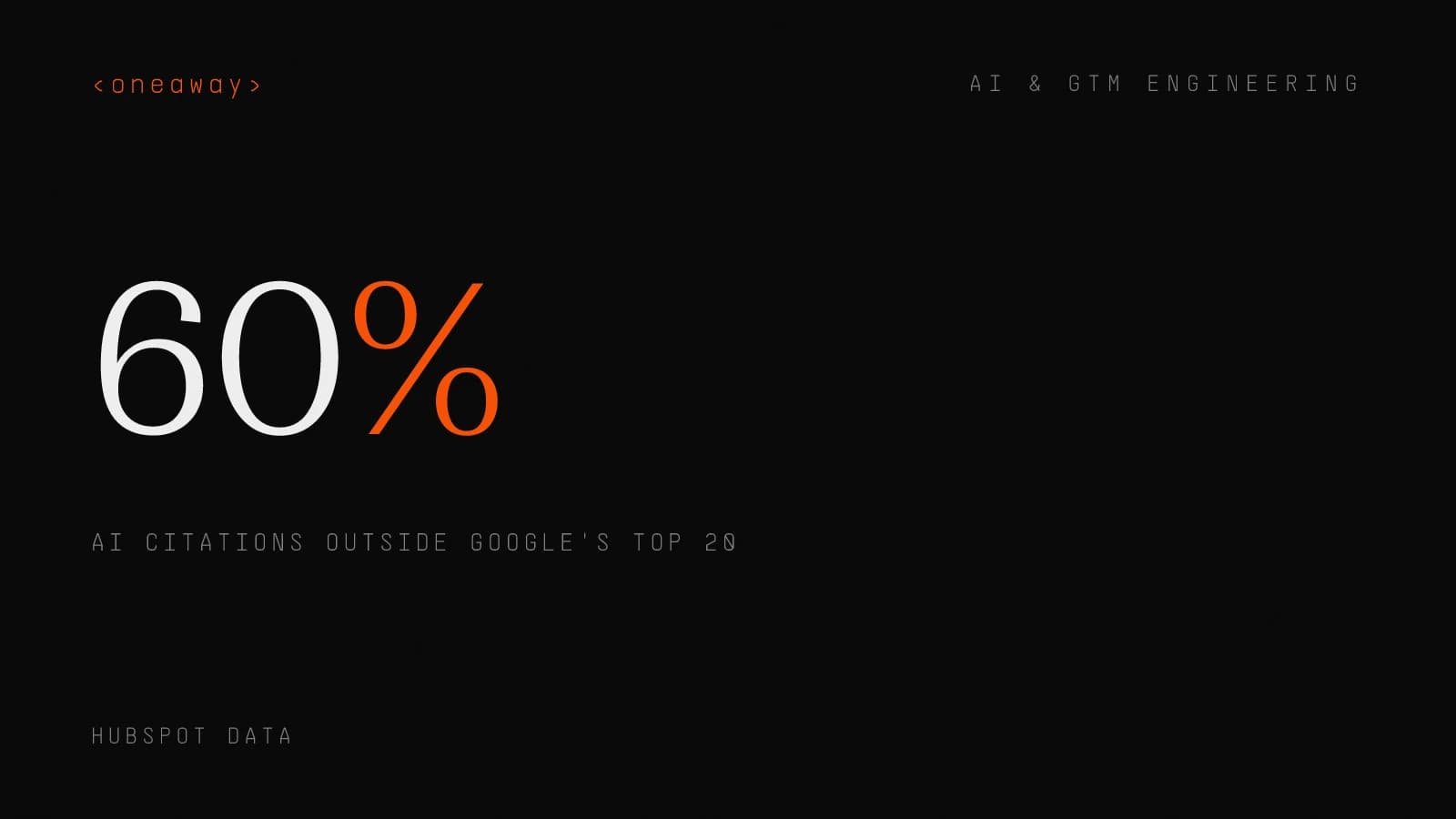
AEO (Answer Engine Optimization) is how you get your business cited by AI search tools like ChatGPT, Perplexity, and Gemini. 60% of AI citations don't come from Google's top 20 results, meaning smaller companies have a real shot. AI search converts 5-13x higher than Google. The key tactics: chunked content, natural language headers, answer-first architecture, and making all your information publicly accessible.
What is AEO (Answer Engine Optimization)?
AEO is the practice of optimizing your content so AI tools like ChatGPT, Perplexity, and Google's Gemini cite and recommend your business when users ask questions.
Think about how you use ChatGPT. You don't type “best B2B email tools” like you would on Google. You type something like “I'm a 50-person SaaS company trying to improve our cold email reply rates, what tools and strategies should I look at?” That prompt is 40-60 words. A Google search is 4-6 words.
The AI then reads hundreds of sources, synthesizes them, and gives one answer. Your content is either part of that answer or it's not.
SEO got you ranked. AEO gets you cited.
Two metrics define AEO success. Mentions are when your brand gets named in an AI response. Citations are when your brand gets named AND linked. Both matter, but citations are the conversion driver because they send people directly to your site with the AI's implicit endorsement.
Why AEO Matters Right Now (The Data)
Here's what Kip Bodner shared from HubSpot's data that should make every marketer pay attention:
60% of AI citations do NOT come from the top 20 Google results. Read that again. The sites winning in traditional SEO are not automatically winning in AI search. This is greenfield. If you're a smaller company that could never outrank the big players on Google, AI search is your opening.
AI search converts 5-13x higher than Google. HubSpot measured this across their own queries. People coming through AI recommendations convert at dramatically higher rates. Why? Because by the time someone gets an AI recommendation, they've already described their exact problem and context. The AI matched them to you specifically. That's a qualified lead before they even hit your site.
58-60% of Google searches now result in zero clicks. Google's own AI Overviews are eating organic traffic. But here's the flip side: when your content appears in an AI Overview, your organic click-through rate jumps 30-35%. AI is both destroying and creating traffic simultaneously.
HubSpot grew their AEO-driven customers 15x in the last year. This is HubSpot, a company that arguably invented modern inbound marketing and SEO content strategy. When the CMO of HubSpot says AEO is where they're putting their chips, it's worth listening.
My Own AEO Experiment: 54 to 1,071 Impressions in 4 Days
I want to share something personal because it shows how fast AEO can work compared to traditional SEO.
I used Claude Code to create SEO blog content for my site. Structured it specifically for how AI search engines read and cite content: chunked sections, natural language headers, answer-first architecture. Not the traditional SEO playbook of 3,000-word keyword-stuffed walls of text.
Within 4 days, my Google Search Console showed impressions jumping from 54 to 1,071. That content also led directly to booking a meeting.
With traditional SEO, you're waiting 6-12 months to see meaningful results. With AEO-optimized content, I saw movement in days. Kip confirmed this at the HubSpot level too: AEO results can happen same-day. The speed difference is that dramatic.
How AEO is Different from SEO
SEO and AEO share the same foundation, but the tactics diverge in important ways.
Content Architecture
Traditional SEO rewards ultra-long-form content, keyword density, and internal linking clusters spread across dozens of pages. You'd write a pillar page, then 15 cluster articles, all linking back and forth.
AEO rewards chunked content with answer-first architecture. Instead of spreading information across 15 pages, you consolidate into one comprehensive page with segmented, chunkable sections. Each chunk is a mini answer box that responds to a specific question concisely.
Think of it this way: a traditional SEO page is a textbook chapter. An AEO page is a well-organized FAQ where each answer is 1-2 paragraphs and can stand on its own.
Headers
SEO headers are keyword-optimized. “Best Email Marketing Tools 2026.”
AEO headers are natural language questions that someone would actually type into ChatGPT. “What email marketing tools work best for B2B companies with small teams?”
Entity-First Thinking vs. Keywords
This is the biggest mental shift. SEO is keyword-first: figure out what people search, match it.
AEO is entity-first: AI needs to understand your company as an entity. Who you are, what you do, what makes you different. And that understanding needs to be consistent across every piece of content you publish.
Domain authority matters less in AEO. Entity understanding matters more. The AI is asking “does this company actually know what they're talking about in this space?” not “does this site have a high DR?”
Cross-reference credibility is what matters. Your definitions and claims should match what others say about you across the web. Reviews, ranking sites, affiliate content, Reddit threads. They all contribute to how the AI understands your entity.
The Visibility Problem: Why Most Businesses are Invisible to AI
Here's what most companies don't realize: the content strategies that worked for SEO actively hurt you in AEO.
Gated Content
If your best content sits behind an email gate, LLMs can't read it. You're hiding your best answers from the exact systems that could recommend you. Kip's advice from HubSpot: ungate your content, or at minimum allow LLMs to crawl gated pages. The lead gen form that captures emails is actively blocking AI recommendations.
Walled Garden Social Media
LinkedIn and Twitter are walled gardens. LLMs have limited access to that content. You might have incredible posts with thousands of likes, but ChatGPT can't see them.
Reddit is different. OpenAI has a data partnership with Reddit, which means your Reddit presence directly impacts ChatGPT visibility. That's a tactical insight most marketers are ignoring.
Pricing Pages
Companies that hide their pricing are at a disadvantage. When someone asks an AI “what does [your product] cost?” and the AI can't find the answer, it either skips you or hallucinates something wrong. HubSpot found 300,000 404 errors in a single month from LLMs hallucinating links to pages that didn't exist.
Make your information public. Pricing, FAQs, product details, comparison pages. LLMs will try to find this information regardless. Better that they find the truth on your site than a wrong answer somewhere else.
Practical AEO Tactics You Can Implement This Week
Based on what I've learned from Kip Bodner and my own testing, here are the moves that matter:
1. Restructure Your Content into Chunks
Take your existing long-form content and break it into clear, question-and-answer sections. Each section should be 1-2 paragraphs. Each header should be a natural language question. Go through your top 10 most-trafficked pages and reformat them first. That's where you'll see the fastest impact.
2. Create FAQ-Style Pages
Build pages specifically designed as chunked Q&A content. These are gold for AI citations because each chunk can be extracted as a standalone answer. Think about the 20 questions your sales team hears most often. Turn each one into a section with a clear, concise answer. That's your first AEO page.
3. Build Your Reddit Presence
Start contributing genuine value in subreddits relevant to your industry. Not promotional posts. Helpful, detailed answers that solve real problems. OpenAI's Reddit partnership means this content directly feeds ChatGPT recommendations. Find 3-5 subreddits where your target buyers hang out and start answering questions weekly.
4. Ungate Your Best Content
The math has changed. A gated whitepaper might capture 500 emails. But if that same content were public, it could get cited by AI tools that drive thousands of people to your site, converting at 5-13x the rate of Google traffic. The email gate that captures leads is also blocking the AI recommendations that would send you 10x more leads.
5. Make Everything Public
Pricing, product specs, comparison data, how-to guides. The more information AI can access about your business, the more accurately it can recommend you. Companies that hide pricing lose twice: the AI either skips them entirely or invents a wrong number, and then the prospect trusts whatever the AI said.
6. Build a Great 404 Page
LLMs hallucinate links. HubSpot saw 300K broken link visits in one month from AI tools sending people to pages that don't exist. Build 404 pages that redirect people to the right content instead of dead ends. Include a search bar, links to your most popular resources, and a clear path to whatever the visitor was likely looking for.
7. Add Alt Text to All Visuals
AI bots read alt text. Every image, diagram, and screenshot on your site should have descriptive alt text that helps bots understand the visual content. This is low effort, high reward. A 30-minute audit of your image alt text can meaningfully improve how AI understands your pages.
8. Include Video Content with Transcripts
AI bots can reference video explanations when they're accompanied by text transcripts or descriptions. If you have video content on your site, make sure each video has a full transcript or detailed summary on the same page. This gives the AI more text to work with while also improving accessibility.
How to Measure AEO Performance
The metrics are different from SEO. You're shifting from rankings and clicks to brand metrics.
Key AEO metrics:
- Mentions: How often is your brand mentioned in AI responses?
- Citations: How often is your brand mentioned AND linked?
- Sentiment: What does the AI say about you? Positive, neutral, negative?
- Share of voice: In your category, how often do you show up vs. competitors?
HubSpot built a free AEO Grader tool that tracks brand recognition, market score, quality of presence, sentiment, and share of voice across OpenAI, Perplexity, and Gemini.
Other tools worth looking at: Xfunnel (acquired by HubSpot) and Limey.ai.
One important note on attribution: AI search makes attribution harder. Someone might discover you through a ChatGPT recommendation, then type your URL directly into their browser. That shows up as direct traffic, not AI referral traffic. Kip's framework: think “source of customers” not “source of traffic.”
Each AI Platform is Different
Not all AI search engines are the same, and that matters for your strategy.
ChatGPT has the Reddit data partnership, so Reddit presence directly impacts your visibility there. It's the largest player with 800M weekly active users.
Perplexity indexes the web more broadly and emphasizes citations heavily.
Gemini (Google's AI) pulls from Google's existing index but applies AI-native logic to what it surfaces.
Grok only uses Twitter/X data, making it a niche platform.
On-page optimization is similar across all of them. Answer-first content, chunked sections, natural language headers. The off-page influences are where they diverge. Build your on-page foundation first, then optimize for specific platforms based on where your audience asks questions.
The Bottom Line
Kip Bodner, the CMO of HubSpot, put it bluntly: AEO's worst-case scenario is that it becomes 20% of total customer acquisition within a few years. Best case, it becomes the dominant channel.
HubSpot grew AEO customers 15x last year. AI search converts 5-13x higher than Google. And 60% of citations come from outside the traditional SEO winners.
The companies restructuring their content for AI search right now will have a massive head start. The companies waiting for “more data” will be playing catch-up in a game where the early movers already locked in the citations.
I went from 54 impressions to 1,071 in 4 days with one piece of AEO-optimized content. Imagine what happens when you apply this across your entire site.
AEO is the next wave of customer acquisition. The question is whether you'll ride it or watch it from shore.
We help B2B companies get cited by AI search engines at OneAway. If you want to show up when your buyers ask ChatGPT for recommendations, let's talk.
Continue Reading
Best AI Sales Forecasting Models in 2026, Ranked by Accuracy
I tested 11 AI sales forecasting models with real pipeline data. Here's what actually works, ranked by accuracy, cost, and whether your CRM can handle it.
Read more [ 14 MIN READ ]Best AI Sales Team Workflows in 2026, Ranked by Time Saved
I tested dozens of AI tools sales team workflows. Here's what actually saves time in 2026, ranked by hours recovered per rep per week—with real implementation data.
Read more [ 18 MIN READ ]Best AI GTM Tools for Revenue Teams in 2026, Ranked by Impact
I've tested dozens of AI GTM tools as a former AWS/Salesforce SDR turned GTM engineer. Here's what actually moves revenue in 2026, ranked by real-world impact.
Read more