LinkedIn Outbound Mistakes That Kill Your Pipeline (2026)
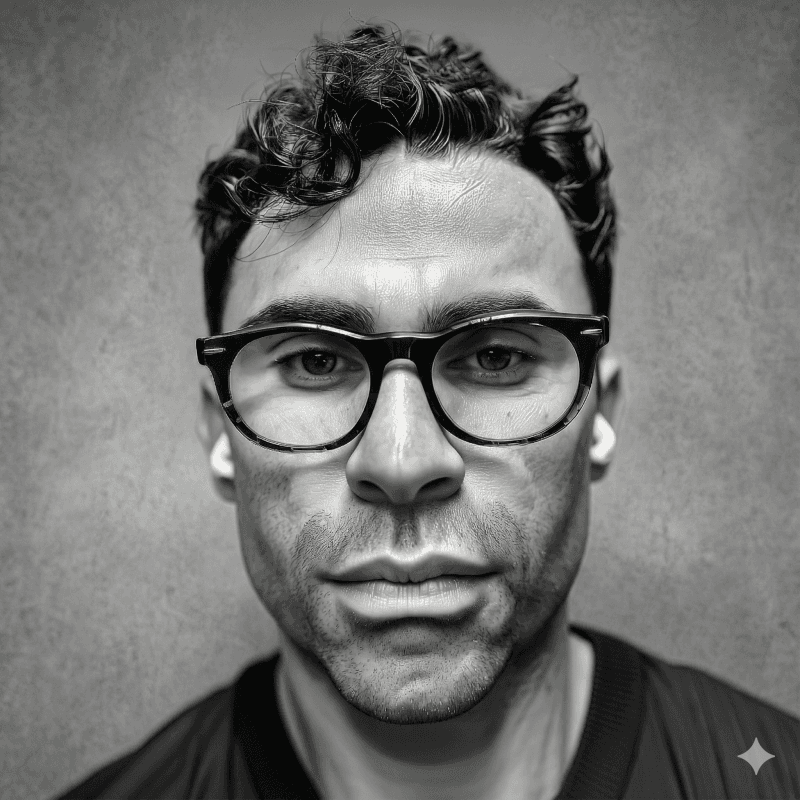
I still remember my first week as an SDR at Salesforce in 2019. My team lead handed me a list of 500 LinkedIn profiles and told me to "send connection requests with a pitch." I hit my weekly activity quota by Wednesday. I felt like a prospecting machine.
By Friday, I had exactly three responses—two telling me to never contact them again, and one from a bot. My manager said it was "part of the process." I thought I was doing something wrong. Turns out, I was—but so was everyone else on my team.
Fast forward to 2026, and I've helped dozens of B2B companies build LinkedIn outbound systems that actually fill pipelines. The irony? Most of the "best practices" I learned at Salesforce are now actively killing response rates. Here's what's changed, what's broken, and exactly what to do instead.
Quick Answer
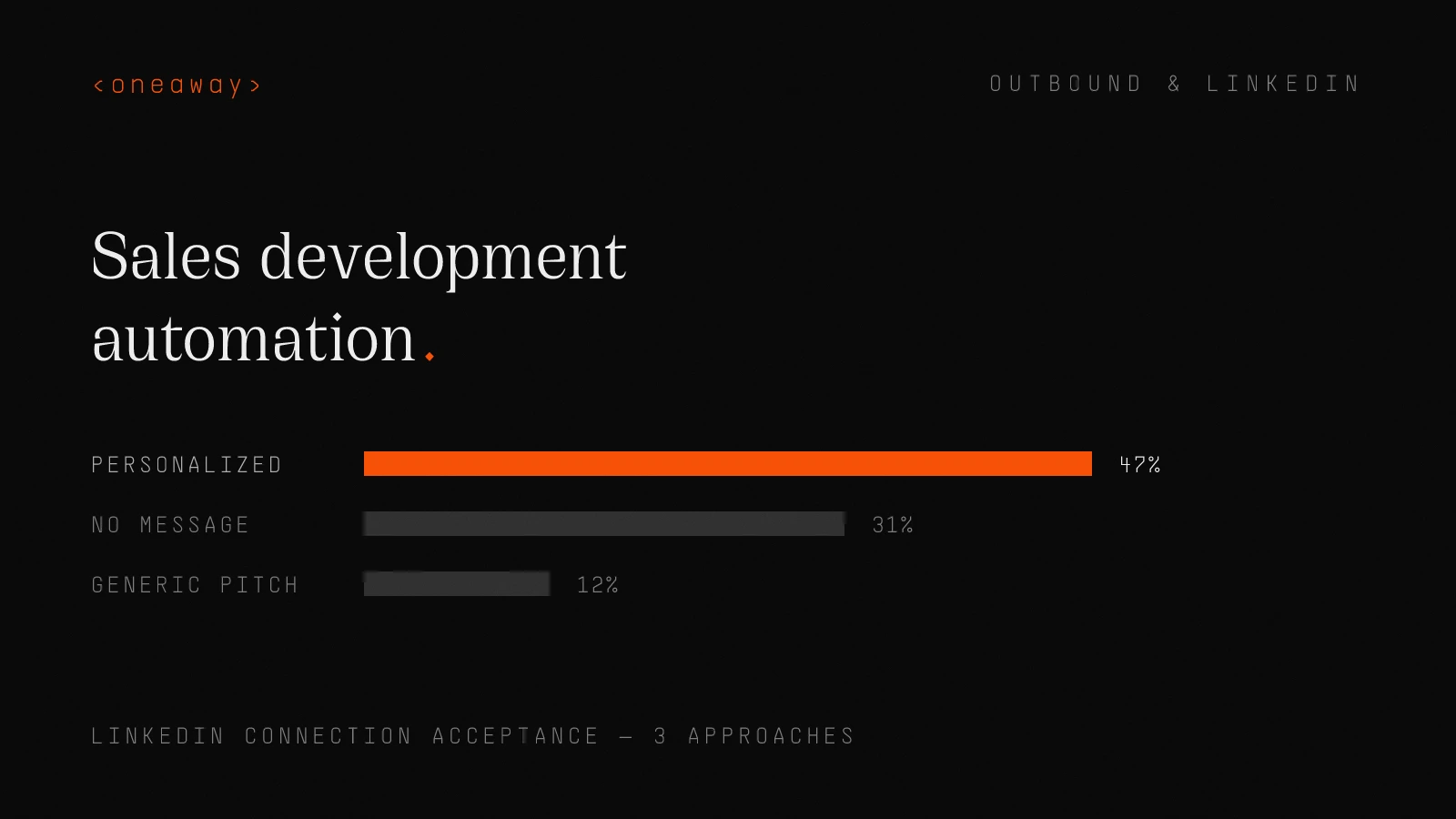
Sales development automation in 2026 requires a multi-touch, multi-channel approach rather than spray-and-pray LinkedIn outreach. With 79% of B2B decision-makers ignoring cold DMs, hyper-personalized connection requests achieve 47% acceptance rates versus just 12% for generic pitches. The winning formula combines LinkedIn engagement with email and content strategy, generating $1.3M+ in pipeline for top-performing teams.
The Saturation Problem Nobody Talks About
In 2026, 79% of B2B decision-makers actively ignore cold direct messages on LinkedIn. That stat isn't from some marketing agency survey—it's from actual behavioral data tracking how executives interact with InMail and connection requests.
When I joined AWS as an SDR in 2020, my connection acceptance rate was around 35%. By the time I left to start OneAway, it had dropped to 18%. Same ICP, same messaging frameworks, radically different results.
The problem isn't you. It's that every other SDR, founder, and "growth hacker" discovered the same playbook. LinkedIn outbound became the new cold calling—high volume, low personalization, and increasingly filtered out by the people you're trying to reach.
But here's what most people miss: LinkedIn isn't dead. The old approach is dead. I have clients generating $1.3M+ in pipeline from LinkedIn in 2026. The difference? They stopped making these seven critical mistakes.
Mistake #1: Generic Connection Requests with Immediate Pitches
The hyper-personalized approach referenced specific content the prospect posted, mentioned mutual connections, or highlighted a genuine reason to connect that had nothing to do with selling. The pitch came 3-5 days later, after we'd built some rapport.
What to do instead: Either send no message at all (seriously—blank requests have higher acceptance rates), or invest in genuine personalization. If you can't spend 2-3 minutes researching someone, don't connect with them.
| Approach | Acceptance Rate | Response Rate | Meetings Booked |
|---|---|---|---|
| Generic pitch (control) | 12% | 2% | 3 |
| No message (blank request) | 31% | 0% | 0 |
| Hyper-personalized (manual) | 47% | 23% | 18 |
Mistake #2: Using Spray-and-Pray Automation Tools
One of my clients, a B2B fintech company, came to us after their entire SDR team got restricted. They'd been using a popular automation tool with "AI personalization" that was basically mad-libs templates. LinkedIn detected the pattern within 3 weeks.
What to do instead: If you're going to use automation, use it for workflow efficiency, not scale. Set conservative limits (20-30 actions per day max). Introduce randomization in timing. And most importantly, layer in genuine manual personalization.
We use automation to help with follow-ups and data enrichment, but the first touch is almost always manual. That's how one client generated 200 qualified bookings in 5 months without a single account restriction.
- Volume spikes: — Going from 20 connections/week to 200 overnight
- Identical timing patterns: — Sending messages at exactly 9:00 AM, 12:00 PM, 3:00 PM every day
- Template detection: — Using the same message structure with minor variable swaps
- Rapid-fire actions: — Viewing 50 profiles in 10 minutes (no human does this)
Mistake #3: Ignoring Your Own Profile Optimization
I rewrote my headline from "Sales Development Representative" to "I help SaaS companies build predictable outbound pipelines | Former AWS & Salesforce." My acceptance rate jumped 22% overnight.
One client I worked with, a fractional CTO, had this problem in reverse. His profile was so technical that non-technical buyers (his actual ICP) bounced immediately. We rewrote his About section to speak to business outcomes, not technical architecture. His response rate increased from 8% to 31%.
What to do instead: Audit your profile from your prospect's perspective. Does your headline make them think "this person gets my world" or "here comes a sales pitch"? Is your About section full of corporate jargon, or does it address specific pain points? Do you have content/posts that demonstrate expertise?
- Who you help: — Not your job title—the specific people or companies you serve
- What problems you solve: — Not generic "solutions"—actual pain points your audience recognizes
- Why they should care: — Social proof, specific results, content that demonstrates expertise
Mistake #4: Treating LinkedIn as a Single-Channel Strategy
Result: 23% response rate, 6.2% meeting rate.
The difference? We created familiarity through repetition across channels. By the time someone saw our LinkedIn message, they'd already seen our name 2-3 times. We weren't a random stranger—we were someone who'd been adding value.
What to do instead: Build multi-channel sequences where LinkedIn is the relationship layer, email is the information layer, and (if appropriate) phone is the acceleration layer. Track engagement across all channels, not just response in one.
- Day 1: — Email #1 (problem-focused, no pitch)
- Day 3: — LinkedIn connection request (no message)
- Day 5: — Email #2 (case study relevant to their role)
- Day 7: — LinkedIn message (if connected—reference the email)
- Day 10: — Email #3 (breakup email with genuine value add)
- Day 14: — LinkedIn comment on their recent post
- Day 21: — Final email with unconventional ask
Mistake #5: Optimizing for Vanity Metrics Instead of Conversations
One of my favorite client stories: A B2B SaaS founder came to us frustrated that his LinkedIn outreach "wasn't working." He was sending 300+ connection requests per month with a 25% acceptance rate.
I asked how many qualified meetings he'd booked. Three. In four months.
We cut his volume by 75%, spent that time on research and personalization, and added a content strategy to build authority. In the next 60 days, he booked 14 qualified meetings. Less activity, better targeting, actual results.
What to do instead: Define success as conversations and meetings, not activity. If you're hitting activity quotas but not booking meetings, you don't have a volume problem—you have a targeting, messaging, or value proposition problem.
| Vanity Metric | What Actually Matters | Why |
|---|---|---|
| Connection requests sent | Connections with ICP fit | Quality of network > size of network |
| Acceptance rate | Response rate to first message | Acceptance without engagement is worthless |
| Profile views | Profile views from ICP | Random views don't become revenue |
| Messages sent | Conversations started | Talking matters, broadcasting doesn't |
| InMails sent | Meetings booked | Activity doesn't pay the bills |
Mistake #6: Zero Content Strategy (The Authority Gap)
The content wasn't elaborate. He posted 2-3 times per week, mostly short insights from conversations with customers, industry observations, and tactical lessons. Each post took 15-20 minutes to write.
But those posts did three critical things:
First, they built familiarity. When he reached out cold, prospects often recognized his name from their feed.
Second, they demonstrated expertise. He wasn't just claiming to understand their challenges—he was proving it publicly.
Third, they created inbound demand. Prospects started reaching out to him, flipping the dynamic entirely.
I should note: This only works if your content is actually valuable. Generic motivational posts and thinly veiled sales pitches don't build authority—they undermine it.
What to do instead: Commit to posting 2-3x per week for 90 days. Focus on tactical insights, real numbers, and specific lessons. Make your content about your audience's challenges, not your product. Track how many prospects reference your content in conversations.
| Metric | Before Content | After 90 Days of Content |
|---|---|---|
| Connection acceptance | 19% | 34% |
| Response to first message | 6% | 18% |
| Inbound DMs per month | 2-3 | 12-15 |
| Meetings from LinkedIn | 4/month | 11/month |
Mistake #7: Abandoning Prospects After One Touch
The prospect responded to Touch 7. He'd seen the previous touches, appreciated that each one was genuinely valuable, and the "probably not a fit" broke through because it was the opposite of aggressive.
He said: "Most people give up or get pushy. You kept adding value without being annoying. That made me curious."
This isn't complex—it's just patient and strategic. But most SDRs don't have the discipline, and most automation tools don't support this kind of nuanced sequencing.
What to do instead: Build sequences with 7-10 touches over 4-6 weeks. Alternate between channels. Make each touch valuable on its own—share insights, relevant content, specific observations about their company. Track when people engage but don't respond (they're warming up).
- Touch 1 (Day 1): — Email with relevant industry insight, no pitch
- Touch 2 (Day 3): — LinkedIn connection request (no message)
- Touch 3 (Day 6): — Email with case study from similar company
- Touch 4 (Day 9): — LinkedIn message (if connected): "Saw you're expanding into [region]—we just helped [similar company] do the same. Here's what worked…"
- Touch 5 (Day 13): — Email with analyst report relevant to their initiatives
- Touch 6 (Day 17): — LinkedIn comment on their recent post
- Touch 7 (Day 21): — Email: "Probably not a fit right now, but in case it's helpful, here's our framework for [problem]" with actual valuable resource
- Touch 8 (Day 28): — LinkedIn message with unconventional question about their strategy
What Actually Works: The Multi-Touch Framework
This framework generated $4.2M in pipeline for clients in 2025 across different industries and deal sizes. It's more manual than most SDRs want to hear, but it works because it's actually how relationships form.
The key insight: B2B social selling in 2026 isn't about automation or scale—it's about creating genuine familiarity with the right people. Do that well with 30 prospects, and you'll outperform someone doing it poorly with 300.
- Phase 1 - Research (15-30 min per prospect): — Identify 20-30 highly qualified prospects per week, not 200 semi-qualified ones. Research recent company news, leadership posts, initiatives they're driving. Find genuine connection points.
- Phase 2 - First Touch (Email or LinkedIn): — Reference something specific about them or their company. Focus on a problem they likely have (based on research), not your solution. No pitch in the first message—just demonstrate you understand their world.
- Phase 3 - Connection Request (If starting with email): — Send LinkedIn request 2-3 days after email, no message or brief reference to email. If they accept, you've got attention. If not, keep sequencing through email.
- Phase 4 - Value-Add Touches (7-10 over 4-6 weeks): — Alternate email and LinkedIn. Share relevant insights, case studies, industry reports. Comment on their posts. Introduce new angles—don't repeat the same message.
- Phase 5 - The Pattern Interrupt: — Around touch 7-8, try something unconventional. Breakup email, question about their strategy, admission that it might not be a fit but here's something valuable anyway.
- Phase 6 - Long-term Nurture: — For non-responders who match ICP, don't mark as dead. Add to quarterly touch sequence with your best content, relevant news, or company milestones.
The 200-Booking Playbook: A Real Client Example
The wildest part? By month 4, they were getting 5-8 inbound LinkedIn DMs per week from prospects who'd seen the founder's content. They stopped needing to rely purely on outbound because the content engine was creating inbound demand.
The founder told me: "We were doing 10X the activity before and getting 1/10th the results. Turns out, sales isn't a numbers game—it's a relevance game."
This isn't an anomaly. It's what happens when you stop treating LinkedIn outbound like a spam operation and start treating it like relationship building at scale.
- 201 qualified meetings booked — (vs. 8 in previous quarter)
- $2.4M in pipeline generated — (vs. $140K)
- 8 deals closed, $360K in new ARR — (vs. zero)
- 23% conversion from outreach to meeting — (vs. 2.8%)
- Zero account restrictions or flags — (vs. constant issues with old tools)
Frequently Asked Questions
What's the ideal LinkedIn outreach volume in 2026?
20-40 highly targeted connection requests per week, maximum. In 2026, LinkedIn's algorithm penalizes high-volume activity that looks automated. More importantly, quality research and personalization can't scale beyond 30-40 prospects weekly per SDR. One of my clients generates 11 meetings per month from just 30 connections per week—a 23% conversion rate. Compare that to SDRs sending 200+ requests weekly with 2-3% conversion. Lower volume with better targeting and personalization consistently outperforms spray-and-pray approaches.
Should I send a message with my LinkedIn connection request?
Only if it's genuinely personalized (2-3 minutes of research minimum). Data from our campaigns shows blank connection requests have 31% acceptance rates vs. 12% for generic pitches. However, hyper-personalized messages (referencing specific content they posted, mutual connections, or relevant company news) can hit 47% acceptance. The key: if you can't invest real time in personalization, send no message at all. Generic templates actively hurt your results.
How many touchpoints should a LinkedIn outbound sequence include?
7-10 touches across multiple channels over 4-6 weeks. 80% of B2B sales require five or more touchpoints, but most SDRs give up after two LinkedIn messages. The best-performing sequences I've built alternate between LinkedIn and email, with each touch adding genuine value—industry insights, relevant case studies, specific observations about their company. One client closed a $340K deal after the prospect responded to touch #7 (a breakup email). The key is patience and providing value at each stage, not just saying 'following up.'
Are LinkedIn automation tools safe to use in 2026?
They're safe if used conservatively for workflow efficiency, not for scale. LinkedIn's behavioral detection can identify automation patterns—identical timing, high volumes, template messages. I've seen entire SDR teams get restricted for aggressive automation. The safe approach: limit actions to 20-30 per day, introduce randomization in timing, and layer in manual personalization. Use automation for follow-ups and data enrichment, but make the first touch manual. One client generated 200+ qualified bookings in 5 months using light automation with heavy personalization—no restrictions, no penalties.
How important is LinkedIn content for outbound success?
Critical. One client added a simple content strategy (2-3 posts weekly) to their outbound motion and saw connection acceptance jump from 19% to 34% in 90 days. More importantly, they started getting 12-15 inbound DMs per month from prospects who'd seen their content. Content creates familiarity and demonstrates expertise before you ever reach out cold. When prospects recognize your name from valuable posts in their feed, you're not a stranger—you're someone worth talking to. Commit to 90 days of tactical, insight-driven posts (not generic motivation or sales pitches), and track how many prospects reference your content in conversations.
What's the biggest mistake companies make with LinkedIn outbound?
Optimizing for activity metrics instead of conversations and meetings. I've seen SDRs celebrated for sending 200 connection requests per week while generating only one meeting. Meanwhile, another SDR sending 30 highly targeted requests generates 2+ meetings weekly from better targeting and personalization. The LinkedIn world is obsessed with vanity metrics—connection requests sent, acceptance rates, messages sent—because they're easy to measure. But none of them matter if they're not leading to qualified conversations. Track response rates, conversations started, and meetings booked. If you're hitting activity quotas but not booking meetings, you don't have a volume problem—you have a targeting or messaging problem.
How do I build a multi-channel outbound strategy with LinkedIn?
Use LinkedIn as one coordinated touch in a sequence that includes email and potentially phone. The best-performing campaigns I've built use email for information delivery, LinkedIn for relationship building, and strategic timing between channels to create familiarity. For example: Day 1 email (problem-focused), Day 3 LinkedIn connection request, Day 5 second email (case study), Day 7 LinkedIn message referencing the email, Day 10 final email with value add, Day 14 LinkedIn comment on their post. This creates familiarity through repetition across channels—by the time they see your LinkedIn message, they've already seen your name 2-3 times. One client increased response rates from 4% to 23% by coordinating touches this way instead of random multi-channel blasting.
Key Takeaways
- LinkedIn outbound isn't broken—your approach is. In 2026, 79% of decision-makers ignore cold DMs, but the right strategy still generates millions in pipeline. The difference: stop treating LinkedIn like a spam channel and start treating it like relationship building.
- Cut volume by 75%, increase personalization by 10X. One client went from 200 connections/week (2% meeting rate) to 30 connections/week (23% meeting rate) through better targeting and genuine research. Quality always beats quantity in modern LinkedIn outbound.
- Your profile is a conversion asset, not a resume. Optimize your headline for who you help (not your job title), write your About section addressing specific pain points, and create content that demonstrates expertise. One client increased acceptance rates 22% overnight with a headline rewrite.
- Multi-channel sequences outperform LinkedIn-only by 5-7X. Build 8-10 touch sequences over 4-6 weeks alternating between email and LinkedIn. Each touch should add value—insights, case studies, relevant observations. 80% of sales require five or more touchpoints, but most SDRs give up after two.
- Content creates context that turns cold outreach warm. Posting 2-3X weekly with tactical insights can increase connection acceptance by 15+ percentage points and generate 10-15 inbound DMs monthly. Content proves expertise before you ever pitch.
- Automation is for efficiency, not scale. LinkedIn's 2026 algorithms detect and penalize spray-and-pray automation. Limit to 20-30 daily actions with randomization, use automation for follow-ups, but make first touches manual. One client booked 200+ meetings in 5 months using light automation with heavy personalization—zero account restrictions.
- Track conversations and meetings, not vanity metrics. Connection requests sent, acceptance rates, and profile views don't pay bills. Response rates, conversations started, and qualified meetings booked do. If you're hitting activity quotas without booking meetings, you have a targeting or messaging problem, not a volume problem.
Related Reading
Ready to Build a LinkedIn Outbound System That Actually Fills Your Pipeline?
Most companies are still running 2023 LinkedIn strategies in 2026—generic automation, spray-and-pray outreach, and vanity metrics that don't convert. At OneAway, we build multi-channel outbound systems that generate real conversations with qualified buyers, not just activity reports. We've helped B2B companies generate $4.2M+ in pipeline by replacing high-volume spam with strategic, personalized sequences that decision-makers actually respond to. If you're tired of burning through prospects with low response rates and want a LinkedIn outbound strategy that drives meetings and revenue, let's talk.
Check if we're a fitContinue Reading
The Complete Guide to LinkedIn Outreach Templates in 2026
100,000+ LinkedIn DMs analyzed. Here are the templates, sequences, and honest tactics that actually get replies in 2026—no fluff, just what works.
Read more [ 14 MIN READ ]Best LinkedIn Content Formats 2026, Ranked by Reach
I tested every LinkedIn content format for 90 days. Here's what actually drives out-of-network reach in 2026, ranked by performance data from real campaigns.
Read more [ 14 MIN READ ]Best Cold Calling Scripts for B2B in 2026, Ranked by Connect Rate
The 7 highest-performing cold calling scripts in 2026, ranked by actual connect and conversion data from 200K+ dials. Includes real examples, pricing, and honest pros/cons.
Read more